_logo.webp)
Marinair CEO Shares Insights on the Future of Freight Forwarding
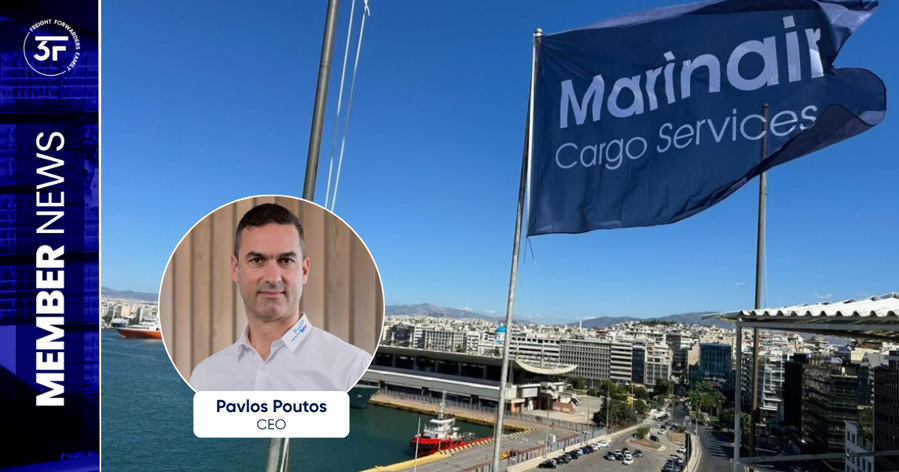
We are pleased to highlight our member, Marinair Cargo Services, following a recent interview with Managing Director and CEO Pavlos Poutos, published by Air Cargo Week on 9 September 2026 under the title “Where technology meets judgement.” Air Cargo Week
In the interview, Poutos shares his perspective on some of the key developments shaping the future of freight forwarding, including the growing role of AI and automation, predictive intelligence, supply chain resilience, changing global manufacturing patterns, and the continuing importance of human expertise.
Technology Meets Human Expertise
As AI, automation, and digital platforms become increasingly integrated into freight forwarding, Poutos emphasizes that technology alone will not determine which logistics companies succeed.
Digital tools can improve areas such as booking, cargo visibility, and operational efficiency, but experienced professionals remain essential when disruptions require information to be interpreted and decisions to be made quickly.
As Poutos explains:
“The real difference will always be people.”
For Marinair, the future therefore lies in combining digital capabilities with experienced professionals who understand their customers’ businesses and can respond effectively when supply chains come under pressure.
From Visibility to Predictive Intelligence
Another key theme of the interview is the evolution of freight forwarders from transportation providers into more strategic supply chain partners.
According to Poutos, customers increasingly expect their logistics partners not only to provide visibility but also to identify potential risks, recommend alternatives and help prevent disruptions before they affect operations.
He distinguishes between knowing where cargo is and using data to understand what could happen next, highlighting predictive intelligence as an increasingly important capability in modern logistics.
Resilience and Business Continuity
The interview also addresses how repeated disruptions—from geopolitical conflicts and regulatory changes to climate-related events—have reshaped customer expectations.
Poutos describes volatility as part of today’s operating environment and sees freight forwarders increasingly acting as risk managers, consultants and strategic partners.
While freight rates remain important, reliability, accountability and the ability to maintain business continuity have become increasingly significant considerations for customers.
Changing Global Trade Patterns
Poutos also discusses the changing geography of global manufacturing. While China remains a major manufacturing powerhouse, countries including India, Vietnam, Indonesia and Mexico are becoming increasingly important within global supply chains.
He particularly highlights India’s development and the opportunities this creates for Marinair, which has invested in the country for many years, including opportunities to strengthen Asia-Europe trade through a combination of local expertise and international standards.
The Role of Independent Freight Forwarders
Looking ahead, Poutos believes independent freight forwarders can continue to differentiate themselves through agility, faster decision-making, direct access to senior management and tailor-made solutions.
Combined with strong international partnerships, these characteristics allow independent companies to maintain global capabilities while remaining flexible and responsive to individual customer requirements.
The interview provides a valuable perspective on how technology and professional judgement can work together as freight forwarding continues to evolve.
We congratulate our member, Marinair Cargo Services, and Pavlos Poutos on this industry feature and are pleased to see our member contributing its experience and perspective to the wider conversation about the future of global logistics.
Read the full Air Cargo Week interview